
65337edinw

Leave Your Message

您的浏览器版本不支持canvas

7 Tips for Sourcing Cute Pilates Socks for Your Brand

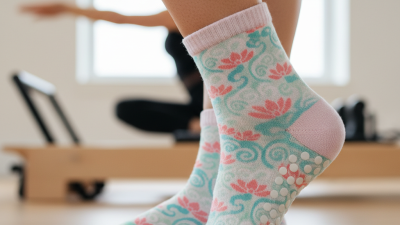
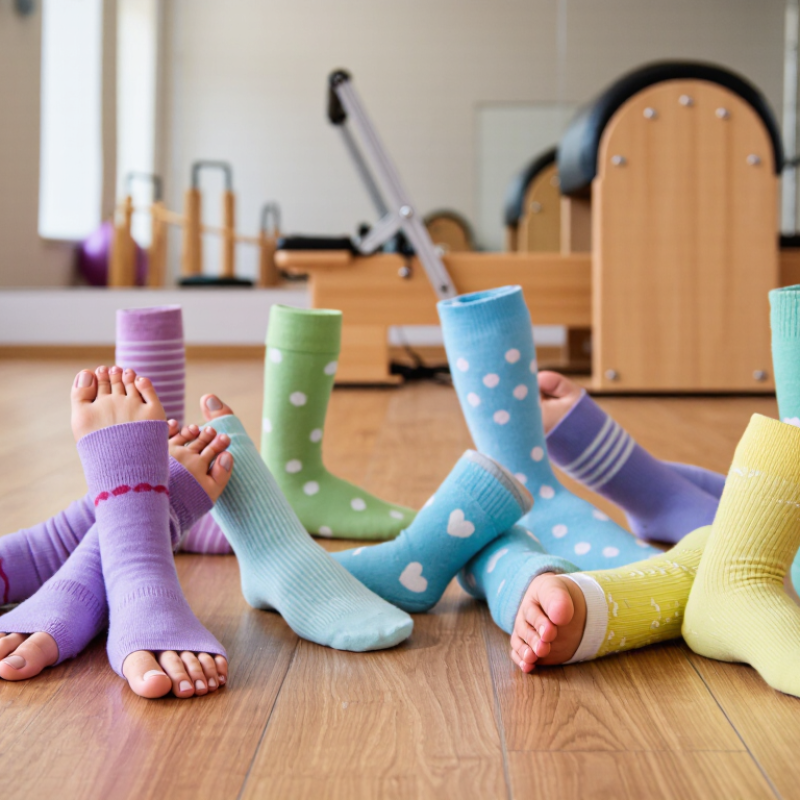
Sourcing Cute Pilates Socks is not only a color and pattern exercise. It is a product-quality decision that affects grip, comfort, hygiene, and customer trust. Pilates authority Joseph Pilates wrote, “The Pilates method teaches you to be in control of your body and not at its mercy.” That principle also suits sock design. A reliable pair should support controlled movement without distracting the wearer.

This guide explores seven practical sourcing tips for building a dependable Cute Pilates Socks collection. Check the sole grip on smooth studio flooring, not only in product photographs. Ask suppliers for fiber percentages, stretch recovery data, washing results, and colorfastness records. Cotton blends may feel soft, while nylon or elastane can improve durability and fit. Small details matter.

Test several sizes.

Do not trust samples blindly.

A sample may survive one class but lose shape after repeated washing. Request pre-production samples and inspect stitching around the toes, heel, and elastic cuff. Confirm minimum order quantities, lead times, packaging options, and factory quality controls before placing a larger order. Supplier transparency is more valuable than a very low quote.

There is room for mistakes. A charming design can still feel slippery, tight, or too warm. Ask instructors and beginner customers to wear-test each style. Their feedback may challenge your original concept, which is useful. With clear specifications, responsible supplier checks, and honest testing, your brand can source Cute Pilates Socks that look appealing and perform reliably in real studios.
7 Tips for Sourcing Cute Pilates Socks for Your Brand

Measure Demand: Pilates & Yoga Studios Reached $87.9B in 2023 (GVR)

The Pilates and yoga studio market reached $87.9 billion in 2023, according to Grand View Research. That scale signals opportunity, but it does not guarantee demand for every cute sock design. Measure interest before placing a large order. Speak with studio owners, instructors, and regular clients. Ask which colors, grip shapes, and ankle heights they actually use.

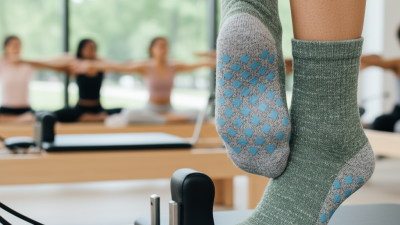
Start with small samples. Test soft cotton blends, secure elastic, and silicone grips on reformer equipment and studio floors. Check whether seams rub after a 45-minute class. Wash each sample repeatedly. Track shrinkage, fading, odor, and grip performance. Small details matter.

Use simple demand signals. Count sample requests, email replies, pre-orders, and repeat inquiries. Compare neutral tones with playful patterns. A tiny survey can reveal more than assumptions. I once favored bright designs too quickly; practical black and cream styles often felt easier to wear outside class. That lesson still needs testing across different markets. Ask suppliers for material specifications, production timelines, quality checks, and clear sample revisions. Reliable sourcing means documenting every change. Cute Pilates socks should look appealing, feel stable, and survive regular washing. The market is large, but your first order should remain cautious.
Define Grip, Fit, and Fiber Using OEKO-TEX® and ASTM Testing Standards

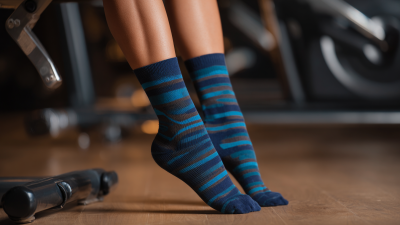
Sourcing cute Pilates socks starts with measurable performance, not decoration. Define grip, fit, and fiber before reviewing colors or packaging. Textile Exchange’s Materials Market Report 2024 recorded 124 million tonnes of global fiber production in 2023. Polyester represented about 57 percent. That scale makes fiber traceability important.

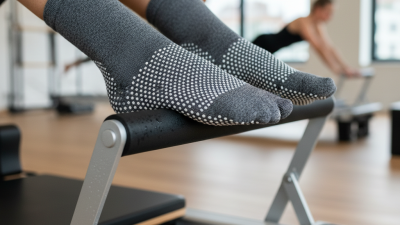
Grip needs a repeatable test. Ask an independent laboratory to evaluate the sock and studio-floor combination using an adapted ASTM F2913 slip-resistance method. Record dry and damp results, pressure, and surface type. A soft silicone pattern may feel secure, yet excessive grip can restrict natural foot movement. Test the contact.

Fit requires more than a size chart. Measure stretch and recovery with a suitable ASTM textile method, such as ASTM D2594 for knitted fabrics. Check heel placement, arch tension, toe-seam bulk, and shrinkage after washing. In wear trials, a sample can fit well but still irritate the little toe. Fit is personal. That detail is easy to miss.

For fiber safety, request an OEKO-TEX Standard 100 certificate covering every relevant component, including yarn, dyes, elastic, and grip prints. Confirm the certificate number and product scope with the testing body. ASTM D629 can support quantitative fiber-content analysis when composition is uncertain. Keep laboratory reports, wash-test records, and supplier declarations together. A report cannot predict every studio floor, so pilot testing with varied users remains necessary. My first specification would still need revision.

7 Tips for Sourcing Cute Pilates Socks for Your Brand

Define Grip, Fit, and Fiber Using OEKO-TEX® and ASTM Testing Standards

Typical fiber-property reference values

Fiber density and moisture regain are general published reference values and can vary by construction, yarn treatment, and finishing process. Use laboratory reports to confirm the final sock specification.

  1. Define grip requirements and request slip-performance testing such as ASTM F2913.
  2. Check stretch and recovery through an appropriate ASTM textile test method, such as ASTM D2594.
  3. Evaluate abrasion resistance with methods including ASTM D4966 or ASTM D3884.
  4. Compare cotton, nylon, polyester, and elastane according to moisture management, density, and intended fit.
  5. Specify elastane placement and recovery targets for arch and cuff support.
  6. Request OEKO-TEX® STANDARD 100 certification for the finished sock and verify the applicable product class.
  7. Approve production samples only after confirming composition, dimensions, grip pattern, colorfastness, and test documentation.

Audit Suppliers with ISO 9001, AQL 2.5, and Pre-Production Samples

7 Tips for Sourcing Cute Pilates Socks for Your Brand

Start with a clear product brief. Define fiber content, size range, grip pattern, cuff height, colors, and packaging needs. Cute details matter, but comfort must lead. Ask suppliers for factory profiles, production photos, and recent quality records. Shortlist factories that produce similar socks regularly.

Audit each supplier’s ISO 9001 certification carefully. Check its validity, issuing body, and manufacturing scope. ISO 9001 supports process control, but it does not guarantee perfect socks. Review incoming-material checks, knitting controls, and final inspection procedures. Request batch records when possible. Be specific. “Good quality” is too vague.

Agree on AQL 2.5 before placing an order. Define critical, major, and minor defects in writing. For Pilates socks, inspect loose threads, uneven grips, color bleeding, holes, and incorrect sizes. Use a consistent sampling plan. Then approve pre-production samples before bulk knitting begins. Test stretch, softness, grip adhesion, washing, and toe comfort. I once focused too heavily on color matching and missed a tight cuff. That mistake changed my checklist. Keep the sample, signed measurements, and approved colors as reference standards. Ask for photos during production, but do not rely on photos alone. Independent inspection can reveal problems hidden by flattering angles.

7 Tips for Sourcing Cute Pilates Socks for Your Brand - Audit Suppliers with ISO 9001, AQL 2.5, and Pre-Production Samples

Tip Sourcing Focus Supplier Evidence to Request Practical Benchmark Quality-Control Checkpoint Warning Sign
1. Define the product brief Specify sock height, toe construction, grip pattern, color palette, size range, fiber content, packaging, and decoration method before requesting quotations. Technical specification sheet, measurement chart, artwork files, packaging requirements, and a written quotation. The quotation should identify yarn composition, unit, minimum order quantity, lead time, sampling cost, and inspection terms. Check that the quote matches the same construction and material specification; otherwise, price comparisons are not like-for-like. A low price is offered without a material breakdown, size chart, or clear description of the anti-slip system.
2. Verify manufacturing capability Confirm that the facility can produce the required knitting, terry cushioning, seamless toe, silicone or PVC grip, embroidery, and color combinations. Factory profile, machinery list, production-flow description, recent process photographs, and sample references without confidential customer information. The production site should explain which processes are performed in-house and which are subcontracted. Compare the submitted sample with the stated capabilities, including stretch recovery, grip placement, and decoration accuracy. The supplier cannot identify the production location or gives inconsistent answers about subcontracting.
3. Audit the quality system Assess whether quality controls are documented and consistently applied from incoming yarn inspection through packing. A valid ISO 9001 certificate covering the relevant manufacturing site and scope, plus quality procedures, inspection records, and corrective-action examples. Verify the certificate number, validity period, certification body, site address, and certified scope independently where possible. ISO 9001 supports a quality-management system; it does not by itself certify a specific sock design or guarantee every shipment is defect-free. The certificate belongs to another site, has expired, or the supplier refuses to share the certified scope.
4. Approve pre-production samples Use a pre-production sample to confirm the final construction, colors, dimensions, artwork, grip layout, labels, and packaging before bulk production. Signed sample-approval record, final measurement chart, approved artwork, material confirmation, and an agreed sample-retention process. Every approved detail should be traceable to the purchase order or technical file. Check pair symmetry, size markings, color under standard lighting, toe seams, loose threads, grip adhesion, and wash-care labeling. The supplier requests bulk approval based only on a digital rendering or an old development sample.
5. Set an AQL 2.5 inspection plan Define the sampling standard, inspection level, lot size, critical defects, major defects, minor defects, and acceptance or rejection rules. Written inspection protocol, sampling table, defect classification, inspection report template, and third-party inspection authorization if required. AQL 2.5 is commonly used as a major-defect acceptance criterion under a defined sampling plan; it is not a promise that 2.5% of every shipment is acceptable. Inspect appearance, measurements, quantity, packaging, grip placement, color consistency, and workmanship against the approved sample. “AQL 2.5” is quoted without an inspection level, lot size, defect definitions, or acceptance-number agreement.
6. Test comfort and durability Evaluate fit, breathability, elasticity, seam comfort, grip performance, colorfastness, shrinkage, and resistance to repeated washing. Material test reports, wash-test results, dimensional measurements before and after washing, and any applicable chemical or restricted-substance documentation. Use the care instructions and intended market requirements to define the test method, temperature, number of cycles, and pass criteria. Check whether grips remain attached and functional, elastic remains resilient, and colors or silicone prints do not visibly deteriorate. The supplier claims “non-slip” or “eco-friendly” without test conditions, material details, or supporting records.
7. Control the first bulk shipment Maintain consistency across sizes, colors, lots, labels, cartons, and quantities while protecting the approved design during production and dispatch. Pre-shipment inspection report, carton-packing list, production lot records, final photos, corrective-action log, and shipment release approval. Release goods only after the inspection result meets the agreed AQL plan and all critical requirements are confirmed. Compare random production units with the retained pre-production sample and verify carton labels, assortment, dimensions, and packed quantity. The supplier changes yarn, grip material, packaging, or production location without written approval.

Note: AQL limits must be agreed with the inspection level, lot size, sampling standard, and defect classification before production.

Set MOQ and Landed Cost Against NRF’s 16.9% 2024 Return Rate

7 Tips for Sourcing Cute Pilates Socks for Your Brand

Set MOQ and Landed Cost Against NRF’s 16.9% 2024 Return Rate

NRF and Appriss Retail reported $890 billion in U.S. merchandise returns in 2024. The overall return rate reached 16.9%. This is not a sock-specific forecast. It is a useful risk benchmark. Tip 1: define the Pilates use case, including grip strength, breathability, and studio temperature. Tip 2: request cotton, nylon, elastane, and silicone specifications. Tip 3: test three sizes on different feet. Cute artwork cannot fix slipping heels.

Tip 4: inspect samples after washing. Look for faded prints, loose threads, and cracked grip dots. Tip 5: calculate landed cost, not only the factory quote. Include packaging, freight, duties, inspection, and payment fees. A $2.20 unit cost can become $3.40 delivered. Small surprises hurt. Tip 6: set MOQ against realistic sell-through, not supplier optimism. If your first order is 2,000 pairs, model 16.9% potential returns before reordering. That leaves about 1,662 retained units, before defects or discounts.

Tip 7: negotiate a small pilot order and written quality limits. Ask for replacement terms, carton measurements, and production photos. In my sourcing experience, attractive samples often hide inconsistent sizing. That deserves skepticism. The 16.9% figure should guide cash planning, but it should not become a lazy assumption. Review actual return reasons monthly, then adjust MOQ, sizing, and landed-cost targets.

Pilot Small Batches: Baymard Reports a 70.19% Cart-Abandonment Rate

Cute Pilates socks can attract attention, but sourcing mistakes can quietly drain your budget. Baymard Institute reports a 70.19% average cart-abandonment rate, making small-batch testing a practical safeguard. Start with two or three designs, such as soft pink grips, ribbed ankle cuffs, or playful arch patterns. Request samples before placing a larger order. Check stretch recovery, toe seams, silicone grip placement, and colorfastness after washing.

Ask suppliers about minimum order quantities, fabric composition, production lead times, and packaging options. Confirm whether recycled fibers, cotton blends, or nylon affect breathability and durability. Measure each sample against your size chart. A cute sock that slips during a lunge will not earn repeat purchases. Include fit tests with different foot shapes. Small details matter.

Use a limited pilot batch to observe real customer behavior. Track which colors sell, where shoppers abandon checkout, and whether shipping costs create hesitation. Keep product photos honest. Show the sock on a real foot, not only in a polished flat lay. Offer clear care instructions and explain grip performance without exaggeration. I would also test one less decorative design, even if it feels boring. Buyers may prefer comfort over novelty. That assumption should be tested, not protected. Record customer comments carefully, then adjust the next batch instead of overordering.